
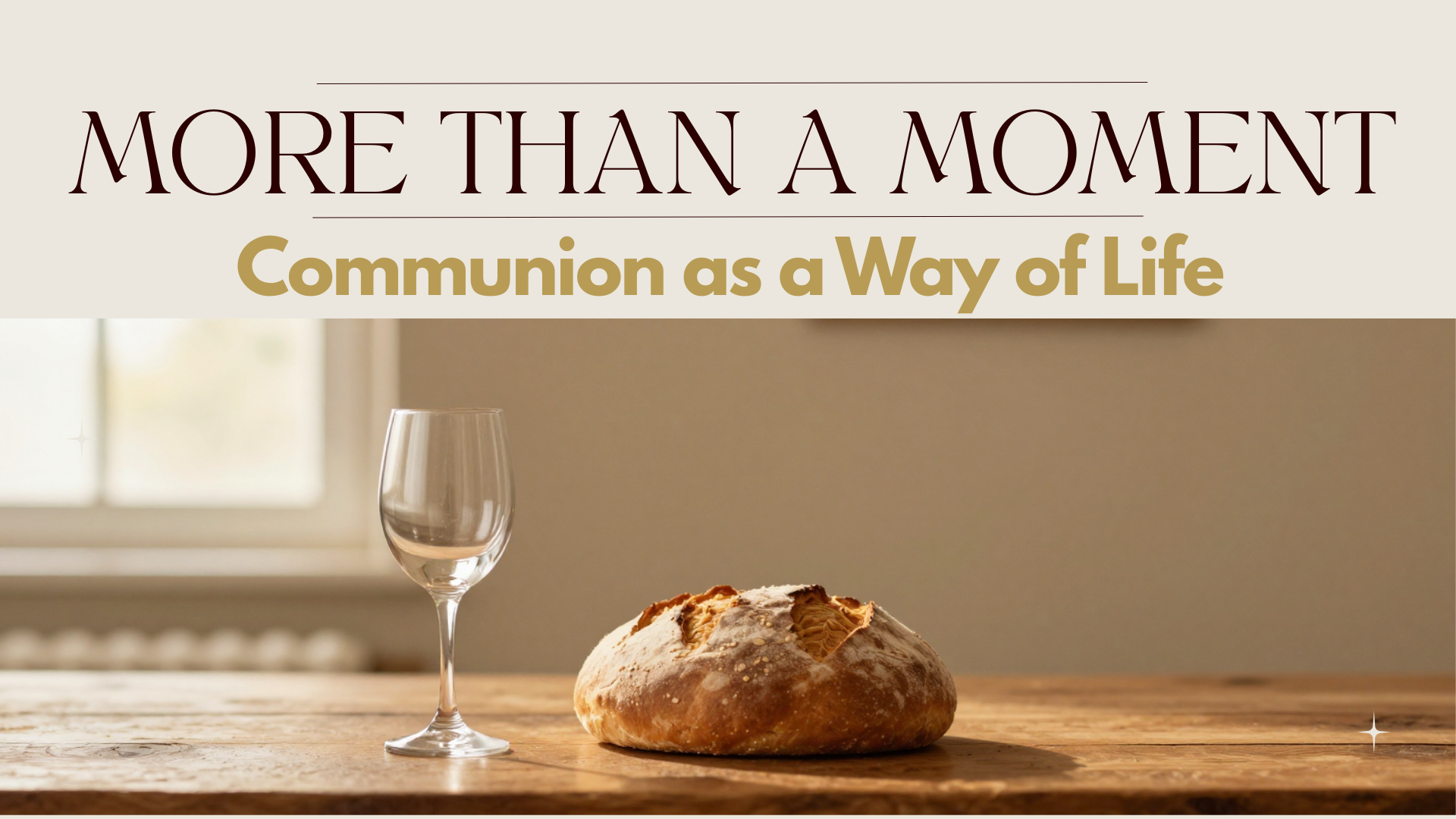
On the night He was betrayed, Jesus didn't hand His disciples a program or a strategy. He gave them a meal. He took bread, gave thanks, broke it, and said, "This is my body, which is for you. Do this in remembrance of me"
(1 Corinthians 11:24).
At Bread of Life Church, we receive communion together as a regular part of our life as a church family. We want you to understand not only what we do, but why. Communion is not simply a moment in a service. It is a picture of the whole Christian life.
Why We Receive Communion
Communion, also called the Lord's Supper, is a meal Jesus Himself instituted and asked His followers to continue (Luke 22:19–20). The bread represents His body, given for us. The cup represents His blood, the new covenant that secures our forgiveness and brings us into relationship with God.
When we receive communion, we are not re-sacrificing Jesus or earning grace. His work on the cross is finished. Instead, we are remembering, proclaiming, and receiving. By faith, and through the Holy Spirit, we encounter the living Christ who is present with His people. Paul calls it a "participation" in the body and blood of Christ (1 Corinthians 10:16). This is not an empty ritual. It is a holy meeting.
A Meal That Shapes a Life
The early church didn't treat communion as an occasional add-on. They "devoted themselves to the apostles' teaching and the fellowship, to the breaking of bread and the prayers" (Acts 2:42). The Table was woven into their everyday life together. Here's how it shapes ours.
A life of remembrance. Remembering isn't just recalling a fact; it's re-centering our lives on what is most true. Every time we take the bread and cup, we're reminded that our identity is rooted in Christ, not in our performance, our failures, or our circumstances. That reminder is meant to follow us into Monday morning.
A life of proclamation. "For as often as you eat this bread and drink the cup, you proclaim the Lord's death until he comes" (1 Corinthians 11:26). Communion is a sermon without words, and the way we live afterward continues that message in our homes, workplaces, and neighborhoods. We don't just receive the gospel at the Table; we carry it out the door.
A life of honest examination. Paul encourages us to "examine" ourselves before we eat and drink (1 Corinthians 11:28). This isn't about proving we're worthy. None of us are. It's an invitation to come honestly, confess sin, and receive grace. A healthy rhythm of communion builds a healthy rhythm of repentance.
A life of unity. "Because there is one bread, we who are many are one body" (1 Corinthians 10:17). We don't come to the Table as isolated individuals. We come as family. If there is a broken relationship in your life, the Table invites you to pursue reconciliation (Matthew 5:23–24).
A life of dependence. Bread is daily food. Jesus called Himself "the bread of life" (John 6:35), and as a church that bears that name, we take this personally. We need Him every day, not just on Sundays. The Table trains our hearts to keep returning to Him as our source.
A life of hope. Jesus said He would not drink of the fruit of the vine again until He drinks it new in His Father's kingdom (Matthew 26:29). Every communion looks forward to the day we will sit at His table face to face.
At the Table in Worship, in Homes, and in LifeGroups
In the early church, believers broke bread "in their homes" as well as when they gathered together (Acts 2:46). We follow that same pattern. Alongside receiving communion in our worship services, you'll also experience it in homes, LifeGroups, prayer gatherings, and other settings where believers gather around Jesus.
These moments matter. Receiving communion around a kitchen table or in a living room reminds us that the presence of Jesus isn't confined to a building or a stage. The Table travels with His people, and it belongs in the ordinary places where life and discipleship happen.
Who Can Receive
Communion is open to all who have placed their faith in Jesus Christ, regardless of church background or membership. If you know Jesus as Lord and Savior, you are welcome at His Table.
If you're exploring faith, still asking questions, or simply not ready, that is completely okay. You don't need to participate, and no one will think twice. Feel free to hold the elements, sit quietly, or use the moment to pray and reflect. We're genuinely glad you're with us, and we'd love to talk with you about what it means to follow Jesus.
Parents, we encourage you to use communion as a discipleship moment with your children and to decide together whether they are ready to participate.
What to Expect in Worship
When we receive communion in our worship services, you'll be handed a prefilled communion cup with a wafer as you enter. Hold on to your elements as you find your seat.
We receive communion together in the middle of worship, as part of our time in the presence of God. A pastor will lead us through a brief reflection, prayer, and Scripture, and then we'll receive the bread and the cup together as one family.
Come to the Table
Communion is a gift. It reminds us who Jesus is, what He has done, and who we are becoming in Him. Our prayer is that this simple meal shapes not just our Sundays, but our whole lives: people who remember well, love deeply, and carry His presence into every place.