

Search
Recent Posts
October 18, 2026 • 7 Minute Read
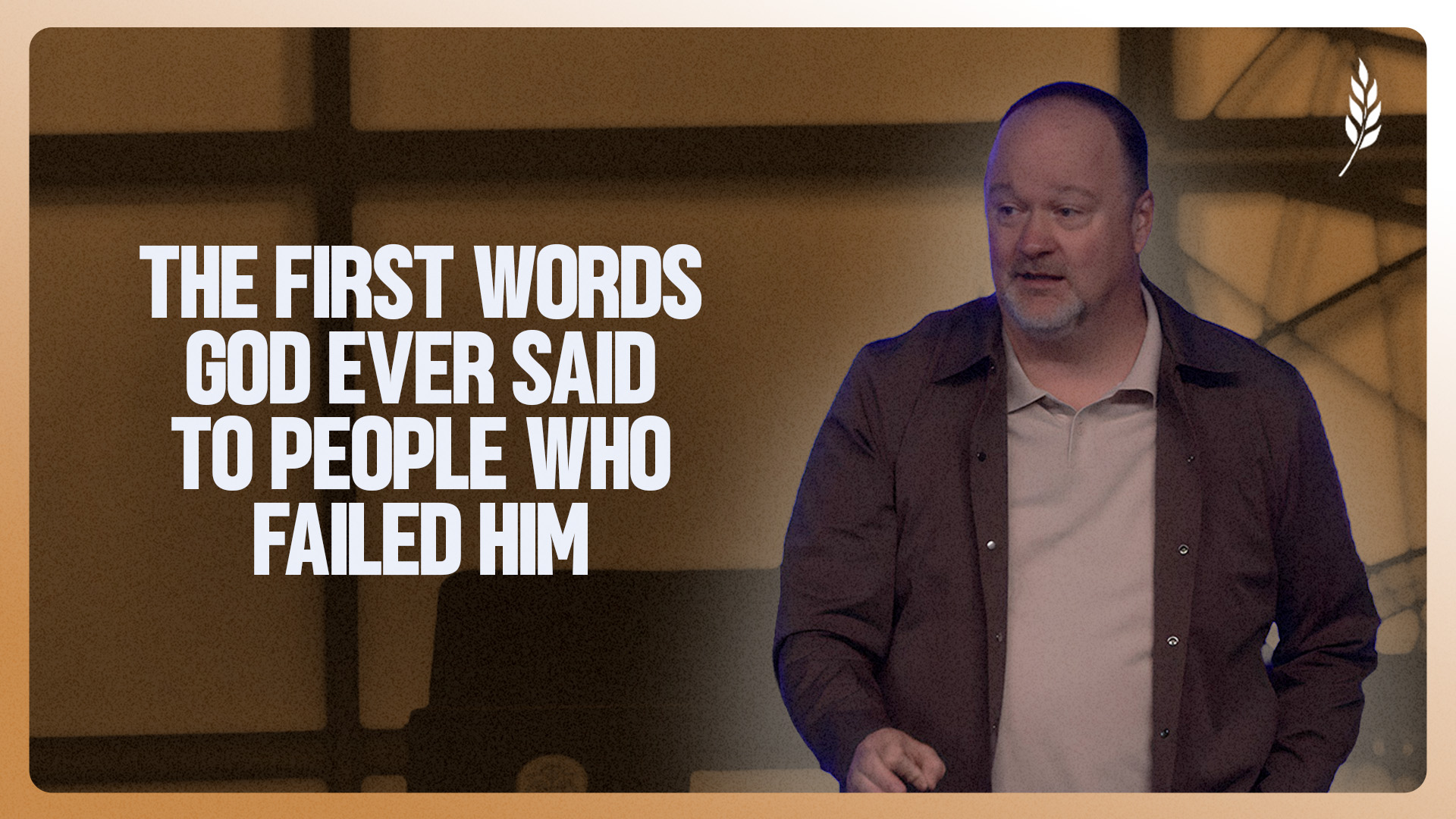
The First Words God Ever Said To People Who Failed Him
The first words God speaks to people who have failed Him come in the form of a question: "Where are you?" In Genesis 3:9, right after Adam and Eve sin and hide among the trees, God comes looking for them. That question reveals His heart toward sinners. He is seeking reconciliation, and He is still asking the same question today. The story doesn't end with Adam and Eve hiding in the trees, because they aren't the only ones walking in the garden. God is walking there too. When we narrow in on what He says, I want you to hear it as more than the first words. I want you to hear it as the word, from today and through all of human history. What Did God Say to Adam and Eve After They Sinned? God comes into the garden in the cool of the day, and Adam and Eve are hiding in the trees. What does God say? He says, "Where are you?" If you can understand it, that is a loving father coming and saying, "Where are you? Where'd you go? Where have you been?" A prosecutor running an investigation would sound very different. God isn't asking because He's looking to punish them. He's looking to bring them out. Here's the truth: do you think Eden is so big and God is so small that Adam could actually hide from Him? Why Would an All-Knowing God Ask "Where Are You?" My sons have hidden from me many, many times over the years. With the exception of one time, when Aidan was eight years old and hid a couple of blocks away and his mom couldn't find him, they haven't been good at it. I know where you are. I know where the kids are. They're never hidden that well. God knows where Adam and Eve are. What He's giving them is an opportunity to say, "Here I am." All the questions God asks in this moment are simply opportunities for Adam and Eve to come, confess, and bring themselves into the light. That's all it is. When we look at it that way, we know God isn't there to punish you or looking to destroy you. He's looking to redeem you. And in that redemption is life for you, rather than the death you've found yourself in. Who Told You That You Were Naked? But they hid. Genesis 3:9-10 puts it this way: "But the Lord God called to the man and said to him, 'Where are you?' And he said, 'I heard the sound of You in the garden, and I was afraid, because I was naked, and I hid myself.'" Then God asks, "Who told you that you were naked?" (Genesis 3:11). In other words, where are you getting this identity from? Who told you that? Who told you there's a problem here? Before that moment, there was no problem. God keeps asking: "Have you eaten of the tree of which I commanded you not to eat?" And the man answers, "The woman whom You gave to be with me, she gave me fruit of the tree, and I ate" (Genesis 3:11-12). Then the Lord says to the woman, "What is this that you have done?" And the woman says, "The serpent deceived me, and I ate" (Genesis 3:13). The serpent wasn't there to give an account, so I don't know who he was going to blame. But they hid. God Is Still Asking "Where Are You?" Before there was a law, before there was a temple, and before there was a sacrifice, there was just a simple question: "Where are you?" He's asking the same question today. And here's what's so good about this: as the people of God, as we're in Christ, we get to go around and talk to people and ask, "Where are you? God's looking for you. Did you know He's looking for you right now? God loves you. Let me tell you about Him. He made you. He knows there's a problem here, but He's here to fix it. He's looking for you. Where are you?" The first words God speaks to sinners in the Bible seek their reconciliation. That's His heart. True Facts, Wrong Posture I was on a road trip across Wyoming with my kids. If you've ever been on a multi-day road trip with your children, and one of them is seven years old, you know the conversations aren't always that robust. Unless the seven-year-old is Titus, in which case the conversations are very robust. At one point I said, "Hey, we're going to listen to the Bible. We'll start in the beginning." We got three chapters in, right to this moment in the garden, and Titus got angry. He asked a question, and I explained that Adam was responsible. He got so mad. He said, "Why is it always the man's fault?" I thought, that is a grasp of spiritual authority at seven years old, and it's good for you to have. Because in a home, let me tell you something. Dad, husband, you may not be guilty, but you are responsible. Know the difference. You're there to fix it. Sometimes there's a nuance between responsibility and guilt. I'll put it that way. So I had to explain this for about 40 miles at 75 miles an hour and talk him down, because he'd been getting in trouble in class over what he viewed as preferential treatment for the girls. I told him, "No, you're just louder, man. You've just got to be sneakier." Then, right away: "Don't do that. That's not a good thing." But the point is this: Adam had true facts and the wrong posture. Did she give it to him? Yes. His facts were true. His posture was wrong. The posture should have been, "Lord, help!" What Happens When You Confess Your Sin to God? David says this in Psalm 32:3-5: "For when I kept silent, my bones wasted away... I acknowledged my sin to You, and I did not cover my iniquity... and You forgave the iniquity of my sin." This is the beauty of the cross. This is the beauty of Jesus. When you are sitting in your sin, you are wasting away. Just like that fig leaf getting more and more brittle, you're going to have to keep reaching for more and more things to cover your nakedness. But at some point you say, "I just confess." And what happens then? I experience His forgiveness. I experience His life. 1 John 1:9 says, "If we confess our sins, He is faithful and just to forgive us our sins and to cleanse us from all unrighteousness." Confession is simply agreeing with God. There's no groveling in it. Where Are You Right Now? You're not hidden in your sins. You can simply say, "Lord, I've sinned. I've fallen short. I need Your help." That's no surprise to Him. He already knew you'd fallen short, and He already provided help. The first words God spoke to Adam and Eve after they failed Him are the same words He speaks to you now. His question, "Where are you?", is simply an invitation to the confession that says, "I need You, Lord."

October 11, 2026 • 7 Minute Read
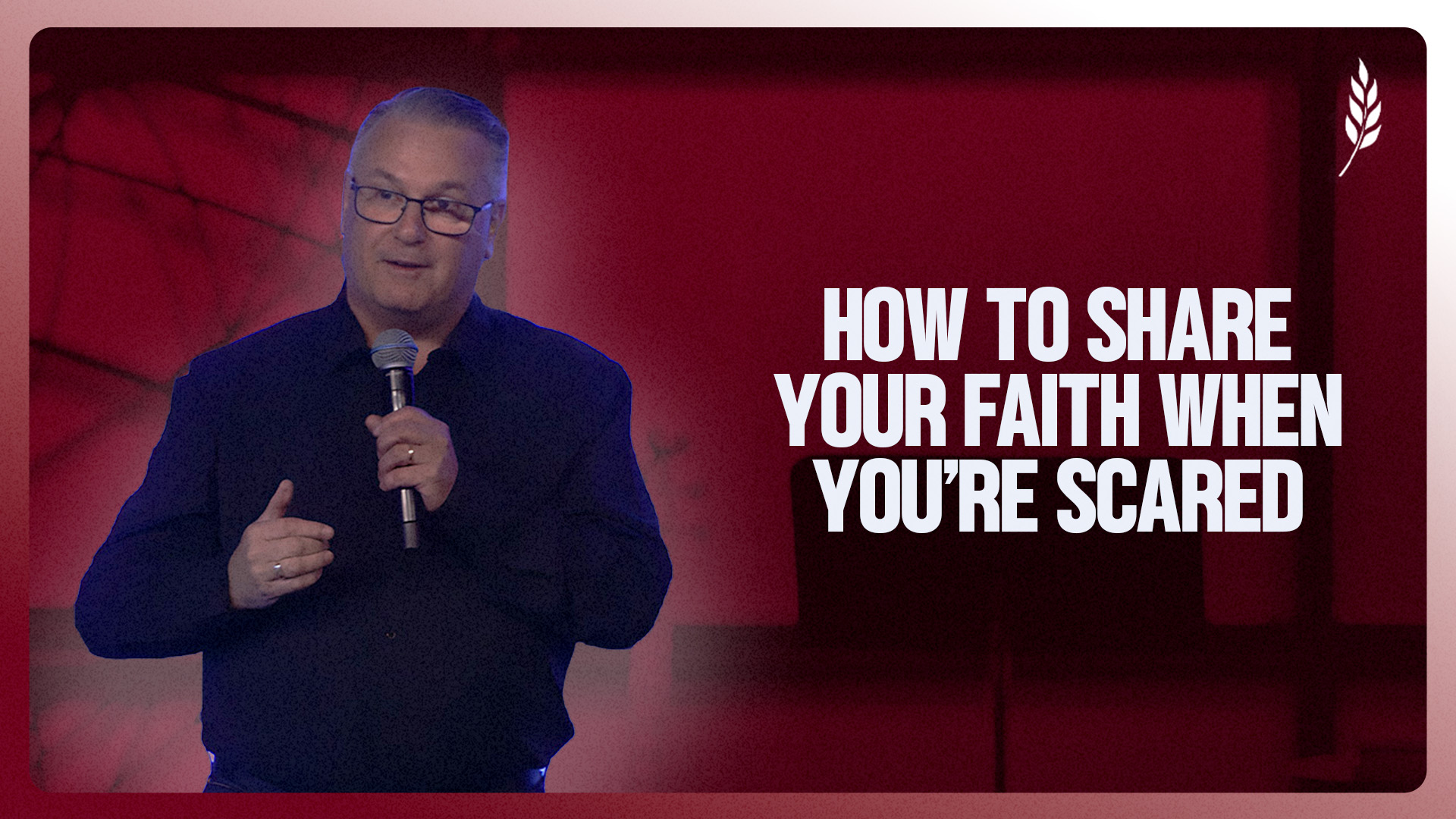
How To Share Your Faith When You're Scared
If you've ever wanted to share your faith but held back because you were scared you wouldn't know what to say, you're in good company. I believe that sometimes we are ashamed of the gospel simply because we don't know what words to use or how to start talking to people. The good news is that learning how to share your faith is something every believer can do, including the shy, the timid, and those of us who think of the right answer hours too late. We are stewards and servants of the gospel, and the gospel is filled with God's glory. So I want to encourage you: don't be ashamed of the gospel. Be an evangelist. Paul Was Not Ashamed of the Gospel The Apostle Paul writes in Romans 1:14-16: "I am under obligation both to Greeks and to barbarians, both to the wise and to the foolish. So I am eager to preach the gospel to you also who are in Rome. For I am not ashamed of the gospel, for it is the power of God for salvation to everyone who believes, to the Jew first and also to the Greek." The word obligation describes something like a financial debt. I think for Paul, that debt felt enormous. He got the chance to hear the gospel, and he was transformed by the gospel. Now he owed it to people of all kinds to share it with them. Then he says he is "eager to preach the gospel." I think that's fascinating. Paul had a long-standing invitation to come to Rome and share with the believers there. When he described what he would do once he arrived, he didn't say he would hold a seminar about when he was in Heaven, or about other things that might tickle people's ears. He said he would preach the gospel, because it is the power of God for salvation. And throughout his letter to the Romans, he actually teaches the gospel. The Gospel Is the Primary Thing Paul describes himself as "a preacher and apostle and teacher" of the gospel (2 Timothy 1:11). Today we hear of people who are apostles of many different things, and we have Bible teachers who specialize in all kinds of subjects. That may be good. But Paul said he was a preacher, an apostle, and a teacher of the gospel. I believe the gospel is the primary thing, and everything else is secondary. It should be the primary thing in everything we do and in every church. And we shouldn't be ashamed of it. Why Is It So Hard to Share Your Faith? For me, it was a struggle when I started following Jesus. I honestly had no idea how I would answer if people started to question the gospel or ask me questions about the Bible. I felt very uneducated to answer these things, and that made me shy about sharing the gospel. I had to work on myself and break through that to become more bold in sharing the gospel. I still have to conquer it, because it's so easy, even as a pastor, to get busy in the church. There are so many things to do and so many people with needs, and suddenly you may pass by people with whom you could have, and should have, shared the gospel. Do the Work of an Evangelist, Even If You're Timid Paul wrote to Timothy in 2 Timothy 4:5: "As for you, always be sober-minded, endure suffering, do the work of an evangelist, fulfill your ministry." If we look a little at Timothy, we can see that he probably was not an evangelist. He was a little timid and a little shy. Paul had to encourage him to let his gift flame up and not to let anyone look down on him. And here Paul tells him to do the work of an evangelist. It doesn't say Timothy has to be an evangelist like Philip. Even if you're not an evangelist, and I'm not one either, you can still do the work of an evangelist. You Don't Have to Be Billy Graham to Plant a Seed The fantastic thing is that the gospel is a seed, and you don't have to be a Billy Graham or a Reinhard Bonnke to plant a seed. Nearly anyone can plant a seed. That is God's wisdom: each and every one of us can share our testimony about Jesus, and each of us can share the gospel. We can also train ourselves in this. In our church, we have practiced sharing our testimonies in our small groups, and we have been working on it together. How to Share Your Faith: Start With Your Testimony One reason this matters to me is that I have sat with people when I wasn't really prepared. Suddenly someone said something about the meaning of life, and I wasn't quick enough. Sometimes I'm a little slow (please don't tell anyone). Afterward I started thinking, "Maybe I should have said something." During the afternoon I thought, "I definitely should have said something." By the time I came home in the evening, I had figured out all the things I should have said, but I never said them. So I prayed, "Lord, forgive me. Give me a new opportunity." That's why I've decided that as soon as an opportunity comes, I will take it. I usually start with my personal testimony, because people listen when they know a person has actually experienced something. I keep it very simple: "I haven't always been a believer. My life was like this. But here I met Jesus, and this is how I met Him. And today I'm so thankful, because He has been with me all these years." That's a simple way of sharing your testimony. From there, you can easily move to what the Bible says in John 3:16, and then continue to talk about Jesus, talk about sin, and talk about the fact that Jesus is alive today. You can share a whole lot of the gospel in just a few minutes. Sometimes we need to train ourselves a little, but we can do it. What If People Don't Respond to the Gospel? Don't expect everyone to be saved immediately. In John 4, Jesus said that we must labor and sow, and that sometimes we harvest where others have sown. So sometimes our task is simply to sow the gospel. Regardless of the reaction, don't take it personally. People dwell in their own personal darkness, with their lies and everything else they carry. Then suddenly you come along, happy, saying, "I believe in Jesus," and they just want to shut the door in your face. Say something anyway. Share something and start. When you share your personal testimony, many people actually listen, and they respect it. You sow something, and then you can continue to pray for them. Decide to Share Your Faith, Even When You're Scared So I want to encourage you today: decide in your heart to take every opportunity to sow the gospel. You don't have to be a famous evangelist, and you don't have to have every answer ready. That's how you share your faith when you're scared. You take the opportunity, you start with your story, you point people to Jesus, and you keep praying for them.
October 4, 2026 • 10 Minute Read
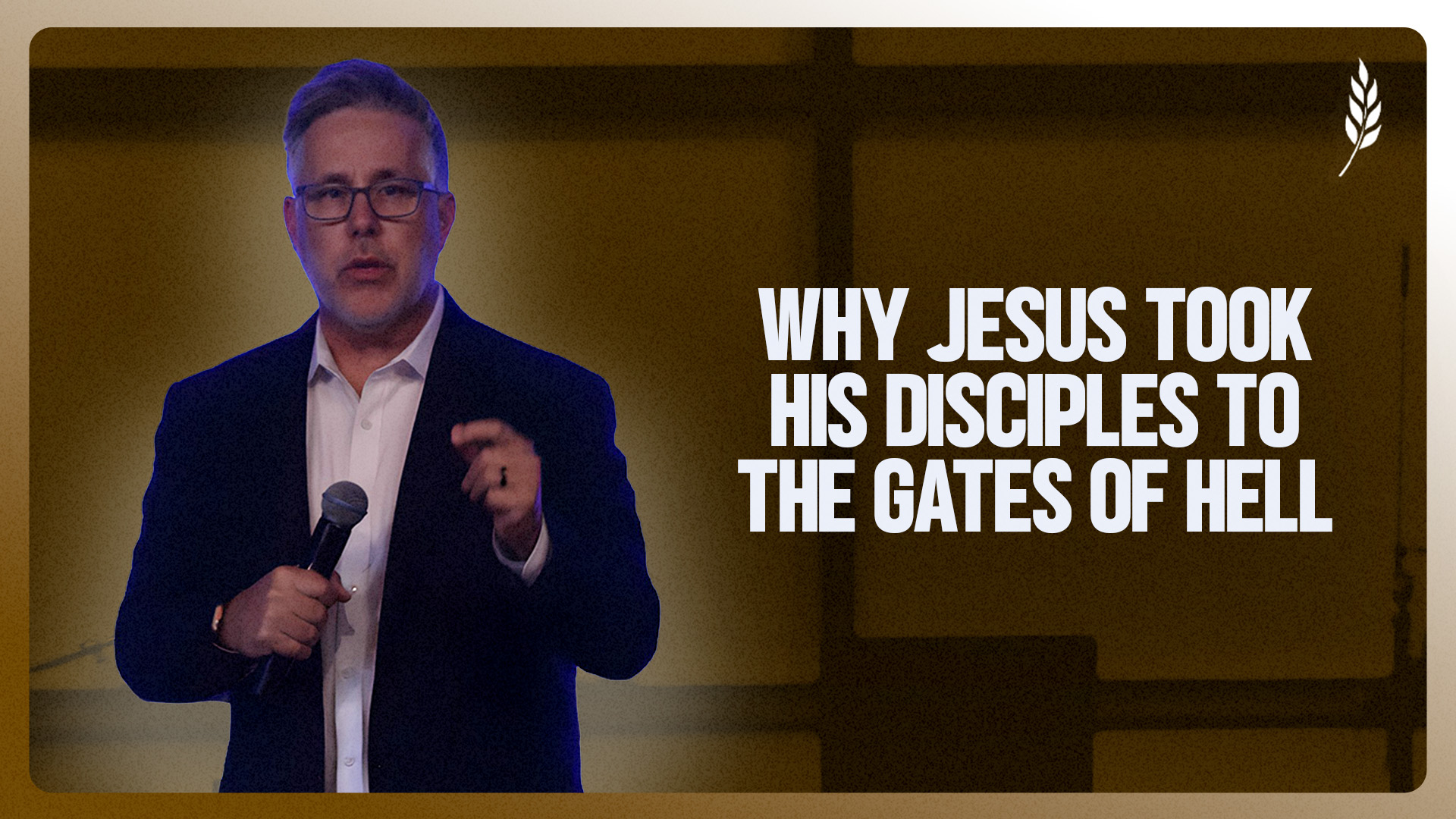
Why Jesus Took His Disciples To The Gates Of Hell
What did Jesus mean when He said the gates of hell would not overpower His church? The answer begins with where He was standing. In Matthew 16, Jesus led His disciples to Caesarea Philippi, a place pagan religions considered the doorway to the underworld, and there He asked them a question God still asks today: "But who do you say that I am?" Jesus chose this spot on purpose, walking His disciples to the base of the Mount Hermon range to make some amazing declarations in the face of everything that region represented. What happened there reveals who Jesus really is, and it exposes the temptation that opens the door to darkness in every one of our lives. Who Do You Say That I Am? The scene opens in Matthew 16:13-16: "Now when Jesus came into the district of Caesarea Philippi, He was asking His disciples, 'Who do people say that the Son of Man is?' And they said, 'Some say John the Baptist; and others, Elijah; but still others, Jeremiah, or one of the prophets.' He said to them, 'But who do you say that I am?'" In that moment, Simon Peter somehow has a spark and answers, "You are the Christ, the Son of the living God." Jesus responds, "Blessed are you, Simon Barjona, because flesh and blood did not reveal this to you, but My Father who is in heaven" (Matthew 16:17). The Father's identity was already starting to imprint on Peter. Peter recognized something about Jesus that was producing a relationship with the Father, and somehow he could hear the Father's voice. He knew what the Father was doing. Jesus continues: "I also say to you that you are Peter, and upon this rock I will build My church; and the gates of Hades will not overpower it. I will give you the keys of the kingdom of heaven; and whatever you bind on earth shall have been bound in heaven, and whatever you loose on earth shall have been loosed in heaven." Then He warned the disciples that they should tell no one that He was the Christ (Matthew 16:18-20). Why Did Jesus Go to Caesarea Philippi? A little history helps here. Caesarea Philippi marks the northernmost border of Israel's territory, going all the way back to the days of the initial conquest. It sits in the area of Mount Hermon, a place that appears in the Old Testament, and the disciples knew its history well. They were standing in a charged atmosphere, to say the least. A Doorway to the Underworld For one thing, the area had a long history of being considered the doorway to the underworld by pagan religions. Right where Jesus stood at the base of the mountain, there was a cave and a spring going down into the earth. The local people, who believed in Pan, in all kinds of false religions, and in demons, believed this was a passage into the underworld. A Temple to Caesar Put Rome on top of that. Caesar Augustus was considered a god and a deity, and Herod built a temple to him and dedicated that mountain to him as a god. So the pagan religions already believed this was a place to interact illicitly with the spiritual world, and now the cult of Rome was producing idol worship and making it a stronghold. Fallen Angels and Giants on Mount Hermon The last layer is the strangest, but it's interesting. Consider Second Temple period Judaism, the season between the end of the Old Testament with Malachi and the beginning of Matthew. During those 400 years of silence, no Scriptures were being written, yet people still believed in God. Jewish people still observed the law and still had temple worship and a priesthood, and by the time Jesus showed up, sacrifices were still being made in the temple. Your average Jew of the Second Temple period would have believed that angels fell from heaven and descended on Mount Hermon, where they had intimate relationships with women and produced giants. Whether you believe that or not is not the point. This is what they believed. And in the Old Testament, when Israel had to drive out physical giants during the conquest, it was in the Mount Hermon area. Standing at the Gates of Hell Picture it. The disciples walk all the way up there with Jesus and stand in front of this pagan, demonic, demon-possessed area. The men standing there think angels came down to the earth and committed nasty deeds that produced giants, giants Israel still had to defeat when they came back into the land, leaving some sort of footprint on the place. Then the cult of Rome brought another demonized layer to it. All of this was multi-layered on top of each other, and Jesus essentially said, "We're going to walk right up to it, and I'm going to ask you a question." Imagine that. The disciples must have been mortified. Where are we going? To Philippi and Mount Hermon, to the place of giants, devils, pagans, Rome, and demons? We're going to stand in front of the thing they call the pathway to the underworld, and You want to have a conversation with us there? That is exactly what Jesus intended. So He asks His question with all of this as His backdrop. Who am I? Am I one of these? Are they in competition with Me? What do you know about Me at this point? This matters because Matthew 16 is the first time Jesus really announces that He is the Messiah. He endorses Peter's confession, something Peter had probably been thinking about up to this point in the Gospel. It had never really been said like this. Jesus lays it clearly on the table: I am the One. He is so much the One that He is about to show them how far above all of this He is, because Matthew 17 brings the Mount of Transfiguration. For now, though, they are down at the base of the mountain. Who Is Jesus to You? Whether you are in Caesarea Philippi or in the middle of your own city, there are powers and multi-layered, demonized ideas, sinful, wicked, pagan, nasty things working in the atmosphere. And God still asks the same question: Who is Jesus to you? Is He simply alongside all of this stuff, someone you consider in tension with it? Or do you understand who He is, that He is the ruler over all of it? He rules all of it. Until your identity is secure in what He made you to be, this stuff will keep working on you, even though you claim to know Him. Jesus is getting at the root of something. Underneath it all is the myth of self, which works on humanity to offer a wisdom alternative to God's. Man took the bait from Satan in the garden, chose his own wisdom, became alienated from God, and became a sinful, rotten person. Compile that over time, and by the time Jesus arrives at Caesarea Philippi, demons, pagans, rituals, and all kinds of things have convinced the world of every variety of ideas about who God is and what God is. Jesus stands up in the midst of all that multi-layered confusion and says, "Let's answer this question. Who am I?" Peter's answer, "You are the Christ, the Son of the living God," cuts through the atmosphere like a knife. It was a good moment, but it doesn't end there, because Jesus is about to go after something else. Why Did Peter Rebuke Jesus? Once Jesus knows His disciples understand that He is the Messiah, the conversation turns. "From that time Jesus began to show His disciples that He must go to Jerusalem, and suffer many things from the elders and chief priests and scribes, and be killed, and be raised up on the third day. Peter took Him aside and began to rebuke Him, saying, 'God forbid it, Lord! This shall never happen to You'" (Matthew 16:21-22). Think about what just happened. In front of every demonic thing in that part of the world, Jesus asked, "Who am I?" and the answer came back that He is the One who rules all of it. Now that they understood that, Jesus began to show them how His rulership would be extended and produced to impact the whole world. Peter didn't like that idea, so he came up with an alternative wisdom. In effect, he said, "Jesus, there's another way to look at this. Let's have some wisdom over here." Notice the words Peter uses. All through the New Testament, the proper name for the Father is God, and the proper name for Jesus is Lord. Paul would say things like, "Blessed be the God and Father of our Lord Jesus Christ" [Reference needed]. Jesus is Lord; the Father is God. So here is what Peter is really saying: "You just told me a few minutes ago that the Father speaks to me too. Since I have a role in this now and can somehow discern something, I have some wisdom for You. I'm here to rebuke You and tell You that God, Your Father, surely doesn't want You to do that. Let me give You some advice, Jesus. Let me sort You out and tell You another way to do this." Why Did Jesus Call Peter Satan? Remember where they were standing: a hostile, spiritually charged, demonized region, probably one of the worst in Israel. Jesus walked in there and settled who He is over all of it. But is it possible that the atmosphere of that highly charged, demonized place, with wisdom altered a hundred different ways, got hold of Peter, and he lost his mind? If Peter, who was called by Christ to follow Him and lived with Him, could take the bait of self-interest in a moment and offer an alternative wisdom, what are the chances you will do the same? How realistic is it that the same atmosphere is talking to you right now? You may be able to sing songs that declare who He is, but when the moment hits that challenges your self-interest, can you still answer well? Or is that where you collapse? Peter hit the wall. Did Jesus respond by inviting him out for coffee for a gentle pastoral conversation, to help him understand the Scriptures a little better? He did not. Jesus said, "Get behind Me, Satan! You are a stumbling block to Me; for you are not setting your mind on God's interests, but man's" (Matthew 16:23). Listen to how Jesus defines where stumbling blocks come from. They come from a mind set on man's interests in place of God's. Self-Interest Is the Doorway to the Gates of Hell Jesus took His disciples to the gates of hell, a place layered with pagan religion, Caesar worship, and stories of fallen angels and giants, and revealed Himself as the Christ who rules over all of it. Moments later, one of His closest followers took the bait of an alternative wisdom. That is the warning of Caesarea Philippi: the temptation of self-interest is the doorway into the demonic every single time. The same question Jesus asked at the base of Mount Hermon is still being asked of you. Who do you say that He is? Is He one option alongside everything working in the atmosphere around you, or is He the ruler over all of it? When your identity is secure in what He made you to be, you can answer that question well, even in the moment your self-interest is on the line.


September 20, 2026 • 5 Minute Read
More Than a Moment: Communion as a Way of Life
On the night He was betrayed, Jesus didn't hand His disciples a program or a strategy. He gave them a meal. He took bread, gave thanks, broke it, and said, "This is my body, which is for you. Do this in remembrance of me"
(1 Corinthians 11:24). At Bread of Life Church, we receive communion together as a regular part of our life as a church family. We want you to understand not only what we do, but why. Communion is not simply a moment in a service. It is a picture of the whole Christian life. Why We Receive Communion Communion, also called the Lord's Supper, is a meal Jesus Himself instituted and asked His followers to continue (Luke 22:19–20). The bread represents His body, given for us. The cup represents His blood, the new covenant that secures our forgiveness and brings us into relationship with God. When we receive communion, we are not re-sacrificing Jesus or earning grace. His work on the cross is finished. Instead, we are remembering, proclaiming, and receiving. By faith, and through the Holy Spirit, we encounter the living Christ who is present with His people. Paul calls it a "participation" in the body and blood of Christ (1 Corinthians 10:16). This is not an empty ritual. It is a holy meeting. A Meal That Shapes a Life The early church didn't treat communion as an occasional add-on. They "devoted themselves to the apostles' teaching and the fellowship, to the breaking of bread and the prayers" (Acts 2:42). The Table was woven into their everyday life together. Here's how it shapes ours. A life of remembrance. Remembering isn't just recalling a fact; it's re-centering our lives on what is most true. Every time we take the bread and cup, we're reminded that our identity is rooted in Christ, not in our performance, our failures, or our circumstances. That reminder is meant to follow us into Monday morning. A life of proclamation. "For as often as you eat this bread and drink the cup, you proclaim the Lord's death until he comes" (1 Corinthians 11:26). Communion is a sermon without words, and the way we live afterward continues that message in our homes, workplaces, and neighborhoods. We don't just receive the gospel at the Table; we carry it out the door. A life of honest examination. Paul encourages us to "examine" ourselves before we eat and drink (1 Corinthians 11:28). This isn't about proving we're worthy. None of us are. It's an invitation to come honestly, confess sin, and receive grace. A healthy rhythm of communion builds a healthy rhythm of repentance. A life of unity. "Because there is one bread, we who are many are one body" (1 Corinthians 10:17). We don't come to the Table as isolated individuals. We come as family. If there is a broken relationship in your life, the Table invites you to pursue reconciliation (Matthew 5:23–24). A life of dependence. Bread is daily food. Jesus called Himself "the bread of life" (John 6:35), and as a church that bears that name, we take this personally. We need Him every day, not just on Sundays. The Table trains our hearts to keep returning to Him as our source. A life of hope. Jesus said He would not drink of the fruit of the vine again until He drinks it new in His Father's kingdom (Matthew 26:29). Every communion looks forward to the day we will sit at His table face to face. At the Table in Worship, in Homes, and in LifeGroups In the early church, believers broke bread "in their homes" as well as when they gathered together (Acts 2:46). We follow that same pattern. Alongside receiving communion in our worship services, you'll also experience it in homes, LifeGroups, prayer gatherings, and other settings where believers gather around Jesus. These moments matter. Receiving communion around a kitchen table or in a living room reminds us that the presence of Jesus isn't confined to a building or a stage. The Table travels with His people, and it belongs in the ordinary places where life and discipleship happen. Who Can Receive Communion is open to all who have placed their faith in Jesus Christ, regardless of church background or membership. If you know Jesus as Lord and Savior, you are welcome at His Table. If you're exploring faith, still asking questions, or simply not ready, that is completely okay. You don't need to participate, and no one will think twice. Feel free to hold the elements, sit quietly, or use the moment to pray and reflect. We're genuinely glad you're with us, and we'd love to talk with you about what it means to follow Jesus. Parents, we encourage you to use communion as a discipleship moment with your children and to decide together whether they are ready to participate. What to Expect in Worship When we receive communion in our worship services, you'll be handed a prefilled communion cup with a wafer as you enter. Hold on to your elements as you find your seat. We receive communion together in the middle of worship, as part of our time in the presence of God. A pastor will lead us through a brief reflection, prayer, and Scripture, and then we'll receive the bread and the cup together as one family. Come to the Table Communion is a gift. It reminds us who Jesus is, what He has done, and who we are becoming in Him. Our prayer is that this simple meal shapes not just our Sundays, but our whole lives: people who remember well, love deeply, and carry His presence into every place.
September 20, 2026 • 10 Minute Read
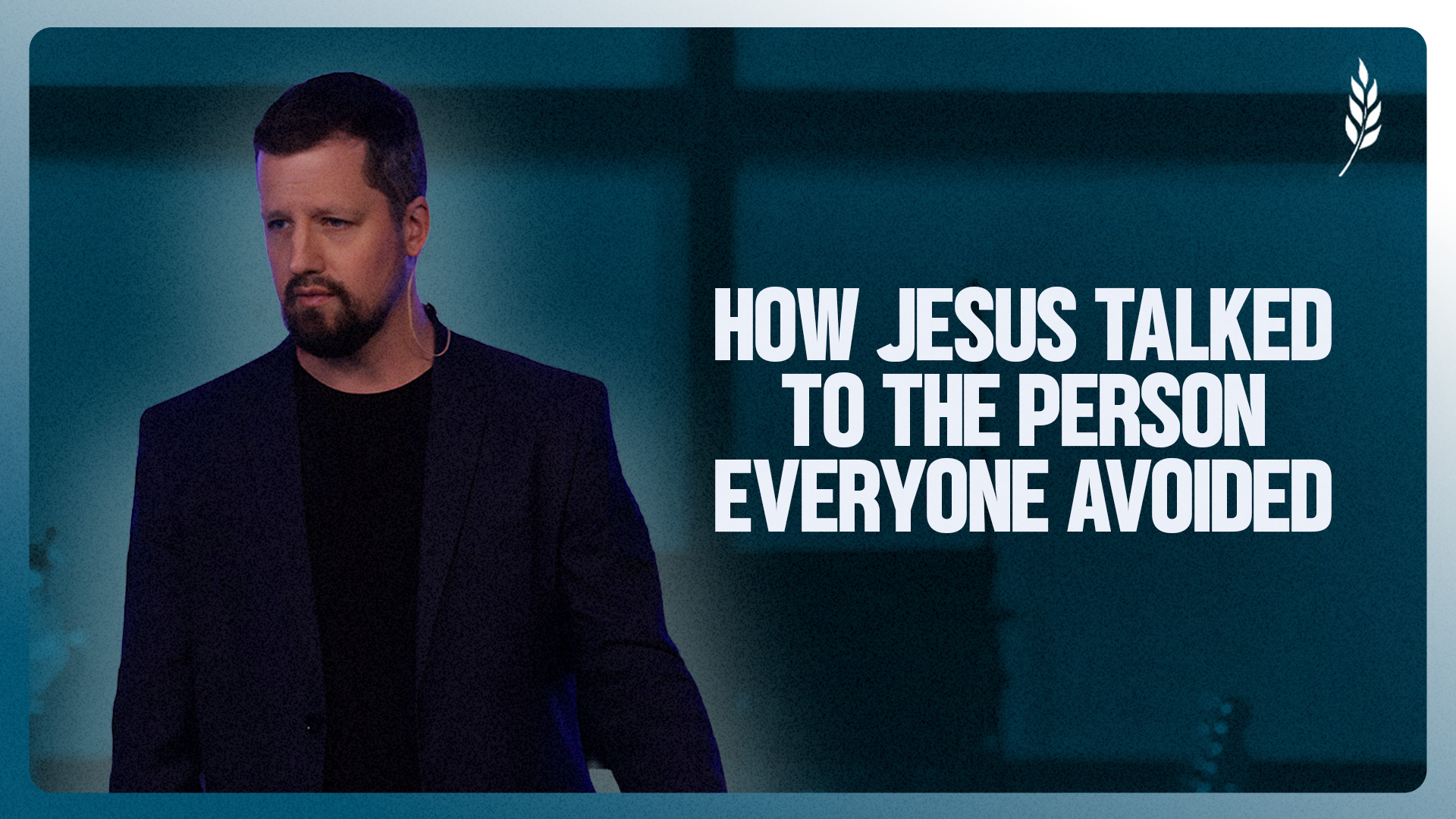
How Jesus Talked To The Person Everyone Avoided
Jesus and the Samaritan woman at the well is the account of God going out of His way to reach the one person everybody else refused to touch. In John 4, Jesus walks straight into the territory Jewish travelers avoided, sits down at a well in the heat of the day, and starts a conversation with a woman who had every reason to expect nothing from Him. Think of the place in your life you refuse to go because it is so terrible and the people there offend you. That is where we are going today. There is real theological depth in this chapter, and there is also a mirror in it. Most of us have someone we have already written off. Why Jesus Went Through Samaria We start in verse three. "He left Judea and departed again to Galilee." Judea sits in the southern part of the kingdom of Israel, and Galilee sits on the northern end. To get from one to the other, "He needed to go through Samaria," which sits right in the middle and blocks the direct route. They come to a city of Samaria called Sychar. For those of you who are Bible nerds, Sychar is almost certainly the old city of Shechem, mentioned many times in the Old Testament. If you study that out, it makes a little more sense why the Jews especially did not like Sychar. It sat on the lower slopes of Mount Gerizim, right there at a place called Jacob's well. That ground carries deep Jewish heritage and history, and the Samaritans had taken it over, living there and perverting the law, the good news, where to worship, and all of it. So here is Jesus with His disciples walking smack dab through the middle of what they would have considered the worst of the worst. He "came to a city of Samaria called Sychar, near the parcel of ground that Jacob gave to his son Joseph. Now Jacob's well was there. Jesus therefore, being wearied from His journey, sat thus by the well." Remember, He was fully God and fully man. "It was about the sixth hour," which means roughly noon, the middle of the day. And along comes a woman of Samaria to draw water. Why Did Jews Hate Samaritans? Pause right there, because by Jewish culture and custom, Jesus should not have said anything. You do not talk to Samaritans. Especially not a Samaritan woman. Especially not by yourself, and verse eight tells us "His disciples had gone away into the city to buy food." Jesus is there alone. He breaks rank with every bit of it and says to her, "Give Me a drink." Her reaction shows just how surprising that was. "How is it that You, being a Jew, ask a drink from me, a Samaritan woman?" The text explains why she would ask: "For Jews have no dealings with Samaritans." Here is a detail worth knowing. The prohibition covered anything that carried even a hint of relationship. You could not receive a gift from a Samaritan. You could not receive a drink of water from a Samaritan. You could buy something from them. They were good enough as merchants, treated like every other Gentile. So when the disciples go into Sychar to buy food, they are doing the one thing they are permitted to do, and their eyes are locked forward. Get the food, do whatever you have to do, and get out as quickly as possible, because I do not want to deal with these awful people. That is what the disciples were thinking. Jesus, on the other hand, decides to violate everything they thought was right, and He asks for a drink of water. How Jesus Started the Conversation That was the introductory statement of Him sharing the gospel. That is evangelism. This is Jesus evangelism right here. He did not open with, "Guess what, I am the Messiah." He did not announce His name. He started by asking for something. When she pushes back on why He would even talk to her, He does not explain Himself or defend His kindness. He goes straight to the offer: "If you knew the gift of God, and who it is who says to you, 'Give Me a drink,' you would have asked Him, and He would have given you living water." Now she is confused. "Sir, You have nothing to draw with, and the well is deep. Where then do You get that living water?" See what Jesus did there. It is very clever. He has already introduced the good news, already announced His kingship, and already announced that He is the Messiah without saying as much, and He has her hooked. I do not think this passage is intended as a good sales pitch seminar, and that is not what evangelism is. Jesus, knowing all things, is incredibly efficient. He is able to give loads of doctrine, truth, and love and get right to the heart of the matter with no wasted words. What Does Living Water Mean in John 4? Living water is life from God, an eternal life that satisfies a thirst no well can reach. She keeps testing Him. "Are You greater than our father Jacob, who gave us the well, and drank from it himself, as well as his sons and his livestock?" That question would have upset the Jews. Your father Jacob? Really? You broke off from Judaism, and you want to refer to Jacob as your father? There is so much hostility even in this moment. She is throwing things back at Him, trying to bait Him, and He will not take it. Jesus answers, "Whoever drinks of this water will thirst again, but whoever drinks of the water that I shall give him will never thirst. But the water that I shall give him will become in him a fountain of water springing up into everlasting life."Translation: your well is carnal. You have probably read this passage before if you are saved, and there is so much theology sitting inside it. He is talking about life from God. He is inviting her to something before He ever talks to her about who she is. Jesus Gave the Invitation Before the Confrontation The very first real invitation from Jesus is this: you can come and be saved. You can come and receive water of eternal life. There is something about the gospel that you and I, by ourselves, can do nothing to change people. It takes the power of God, the spark of heaven. I was talking through this in a podcast conversation, and we landed on the fact that a moment of encounter is necessary for someone to receive anything. If I go and have a conversation with you, there is a physical encounter at the human level. You and I can talk and know one another without knowing anything about each other. Conversely, I could read a book all about your life, know all about you, and not know you at all. In this moment, Jesus brings both. He is bringing Himself with a true encounter, and at the same time presenting the truth of who He is. Something supernatural and divine is happening here, because look at how this woman responds. "Sir, give me this water, that I may not thirst, nor come here to draw." I do not want to have to walk all the way up here anymore. Yeah, I will take it. What is it? He Named Her Sin Without Withdrawing the Offer Now Jesus pulls out the confrontation. "Go, call your husband, and come here." The woman has to answer truthfully. "I have no husband." And Jesus tells her exactly what is going on with her. "You have well said, 'I have no husband,' for you have had five husbands, and the one whom you now have is not your husband." This was a big problem. It meant she was living an immoral life. It meant she had sin. Her present relationship was not correct. Jesus knew exactly what was going on before He ever spoke to her, and now He is calling it out. He is saying, I have already given you this invitation, and to receive it I need confession. I need there to be a faith that says, I know who I am, and I want You, and I give myself to You. He does not minimize it. He calls it out by name. He also does not withdraw the offer of living water. The Person I Wrote Off Sometimes we get to know someone a little bit, we see what they are really about and what is important to them, and we write them off. That person? I do not know if I could reach them. I have missed more chances than I have taken, and here is a big one. My wife has step family, and one of them was living in a lesbian relationship. The first time I met them, here are these two women in a very different lifestyle, clearly having rejected any measure of Christianity or faith. They knew I was a Christian, and I did not want to say anything. I looked at them and thought, well, they have made their choice, so what am I going to do? The only thing running through my mind that entire dinner was, this is uncomfortable, this is uncomfortable, this is uncomfortable. I do not know what to say. I do not know how to talk to you. I probably looked like a total prude, over there making small talk. They probably thought I thought I was better than them. This went on for a while. We spent more time with them and saw them relatively often, maybe a couple of times a year, and I never really made any effort to get to know them at all. Then one day one of those women came into my father in law's house while I was there. I do not even remember how the conversation started, but she began telling my wife how she had been invited to church by her son, who had been invited by his friend. She walked in the door and encountered Jesus. She became radically saved. She went home that night and realized she could not live that lifestyle anymore. She moved out of the bedroom because she did not know where else to go. They broke up immediately. The other one, to this day, is still bitter about it. I was deeply convicted, because I realized I was right in front of you the whole time and I could have invited you. I could have shared the good news with you, and I did not, because I had assumed there was no hope for you. I did not do what Jesus did. I left her to rot in hell because I was too proud, stubborn, and stupid to give her a chance. Where to Go From Here Jesus and the Samaritan woman at the well gives us the pattern. He walked into the place His own disciples would not have chosen. He sat down with the person everyone avoided. He offered her living water before He ever named her sin, and when He named it, He did not take the offer back. So the question this story leaves with each of us is a simple one. Who have you already decided is beyond reach? You may be standing right in front of them.
September 13, 2026 • 8 Minute Read
What Being Adopted By God Actually Costs You
Being adopted by God means inheriting the family business. In Romans 8, Paul says that children of God are heirs, and the inheritance is not a comfortable life. It is the work God is already doing in the world, and that work costs something. Most of us come to Jesus carrying expectations. We have ideas about what His work is and about who He is. We just do. By our sinful nature, we expect Him to grant all of our prayers and wishes and to make everything okay in the world. That is not our inheritance. What Does It Mean to Be Adopted by God? Paul writes, "The Spirit Himself bears witness with our spirits that we are children of God. And if children, then heirs, heirs of God and fellow heirs with Christ, provided we suffer with Him in order that we may be glorified with Him" (Romans 8:16-17). Notice who we are fellow heirs with. Christ Jesus is the true Son of God. We are adopted into that family, and we inherit the family business, the work that God is doing in the world. That work includes suffering, and specifically willful suffering. Jesus did not suffer because a pile of bad things happened to Him outside of His control. Jesus chose to suffer for people. What Kind of Messiah Were People Expecting? Israel had expectations for what the Messiah was going to do. They were waiting for Him. He had been prophesied. This messianic figure was going to come and free them from oppression and slavery. At the time, that meant the Roman Empire, a brutal empire. Everyone expected Jesus to show up and liberate Israel, to be a great warrior who would lead the people and overthrow Rome. That was Israel's expectation, and again and again, Jesus showed no interest in it. Jesus came to defeat the real enemy, which was the evil that empowered Rome to be so brutal and also empowered the vicious resistance to Rome's rule that ended in the destruction of the temple. Jesus went after the evil behind those actions. He did not come to rain fire down on sinners, even when some of His own disciples wanted Him to. There is a story where Jesus is not received well in a village, and His disciples ask whether they should do the Elijah thing and call fire down on the people who would not receive Him. Jesus came to rescue people from the sin that stops them from receiving Him. That is the family business. That is what we are adopted into. That is our inheritance. How Did Jesus Defeat Evil? He willfully stepped into the very heart of darkness. The worst thing possible happened to Him. Abandoned by all of His friends, betrayed by a friend, with no one to stand with Him, He was humiliated, spat on, stripped, tortured, and crucified. He did not have to go through any of that. He wanted to go through it, for your sake and for mine. He let all of evil pour over Him and absorbed it without letting it change Him, without becoming the thing He was fighting against. That is how He defeated the devil and made a way for us to be adopted into the family, so that His Spirit could come and reside in us. It happened through costly love. Does the Church Actually Follow That Example? I want to say this next part as gently as possible. As a church in the 21st century in the West, and that is the only church I know, I do not think we follow that example. Not always. Very rarely. I do not think we really understand it, and I am including myself here. We look at people who are suffering the consequences of their actions, and we think that serves them right. Look at them, they are reaping what they have sown. There is a German word for this, schadenfreude, where you take satisfaction in the fact that somebody else has to face the consequences of their own actions. Jesus did not feel any schadenfreude. He lamented. God laments. The Spirit laments the state of the world. What Does Romans 8 Mean When It Says Creation Groans? "For the creation waits with eager longing for the revealing of the sons of God. For the creation was subjected to futility, not willingly, but because of Him who subjected it, in hope that the creation itself would be set free from its bondage to corruption and obtain the freedom of the glory of the children of God. For we know that the whole creation has been groaning together in the pains of childbirth until now" (Romans 8:19-22). There is something deeply wrong with the world. People keep choosing to follow their own passions and desires instead of choosing God. A lot of this is in Romans 1, where Paul says that the wrath of God is being revealed against all unrighteousness. It does not say the wrath of God will be revealed in some distant or even not so distant future. It is being revealed in the moment. Later, Paul explains how it is being revealed. Three times he says that God lets people go. He lets them go to follow their own passions and desires. A lot of what we look at and call sins are the result of sin. Broken people, a broken world. And that world, those people, that creation is waiting with eager longing for the revealing of the sons of God. We are the sons and daughters. We are the children of God. They are waiting for us. We sometimes hear this message as, preach the Word of God so that your friends do not go to hell in the future. But there is no waiting involved. There are people suffering right now, in a measure of hell on earth, already in the present moment. God set it all up that way. That is God's wrath. There is also God's mercy. God's mercy is that He has sons and daughters, children through whom He works to offer people a chance to get out of that darkness. And the world is waiting for it eagerly. Pains of childbirth. Imagine creation laboring for us to be born into the purpose for which we were made. What Being Adopted by God Actually Costs You "And not only the creation, but we ourselves, who have the firstfruits of the Spirit, groan inwardly as we wait eagerly for adoption as sons, the redemption of our bodies" (Romans 8:23). Creation is groaning. It is suffering. It is terrible. We should groan and suffer too. Our inheritance is not a big party in a big palace. You are not saved for the celebration. You are saved to step into the darkness and weep with those who weep. Feed the hungry, and be hungry with the hungry. Feed them out of your own plate rather than out of your abundance. Be patient with people who do not deserve your patience. Let people speak, even if it means that you do not get to. It should cost us something to groan with the groaning world. Why Does the Holy Spirit Groan Within Us? "Likewise the Spirit helps us in our weakness. For we do not know what to pray for as we ought, but the Spirit Himself intercedes for us with groanings too deep for words. And He who searches hearts knows what is the mind of the Spirit, because the Spirit intercedes for the saints according to the will of God" (Romans 8:26-27). There are three groanings here. Creation groans in anticipation of us. Then, as we step into what we are supposed to do and willfully go to that place of suffering, we groan. And then God's Spirit, who lives in us, groans within us. You are a temple of God. God lives in you if the Holy Spirit lives in you. You are different from the temple that the Jews used to have, because you have legs. The world does not come to the temple anymore. We are the temple that steps out into the world, into the very darkest places of it. And from that place, the Spirit who lives in us, God who can do anything, will cry out. The Spirit will cry out in groaning, and the Father who searches all hearts will hear the cry. Where This Leaves You That is where the real power of all of this is. That is how the world will be reconciled, the groaning creation reconciled to the Kingdom of God, heaven and earth becoming one. That is our job. That is the family business. That is the work God is doing in the world. Being adopted by God means you inherit that work, and it will cost you the comfortable inheritance you were expecting. You are adopted into it. You inherit the family business. Now it is your job.


Copyright 2026 Bread of Life Church | Fresno
All Rights Reserved.